
Small cookers have a way of exposing bad design fast. You notice every weak latch, every awkward cord, every control that needs too much babysitting. That is why the portable pellet grill conversation around Traeger’s Ranger line matters for U.S. buyers who want smoke flavor without giving up a whole patio. The headline sounds simple: a compact Traeger with smarter controls for people who cook at tailgates, campsites, condo patios, and weekend cabins. The real question is sharper. Does it make outdoor cooking easier, or does it add more tech to a cooker that still has to ride in a truck bed and survive greasy hands? For readers tracking outdoor cooking product updates, this is the kind of release that deserves a sober look, not hype. Traeger’s current official portable lineup lists the Ranger and Tailgater, with the Ranger shown at 176 square inches of cooking space, 60 pounds, an 8-pound hopper, and a 450°F max temperature. That makes any “Elite” naming worth checking against official product pages before buying from a retailer or ad. For broader product watch coverage, consumer product news hub readers should focus on confirmed specs, practical cooking use, and whether the smart features solve real problems.
Why the Portable Pellet Grill Shift Matters for Backyard Buyers
The small-grill market used to be simple. You bought a charcoal kettle, a propane tabletop unit, or a thin camping grill that cooked hot in the center and cold at the edges. Pellet cookers changed that equation because they brought smoke, steady heat, and oven-like control into spaces where full backyard smokers did not fit. That is the tension behind this category. People want the flavor of a long cook, but they live in townhomes, travel in SUVs, or park under stadium lights on Sunday mornings.
What the Traeger Ranger grill already tells buyers
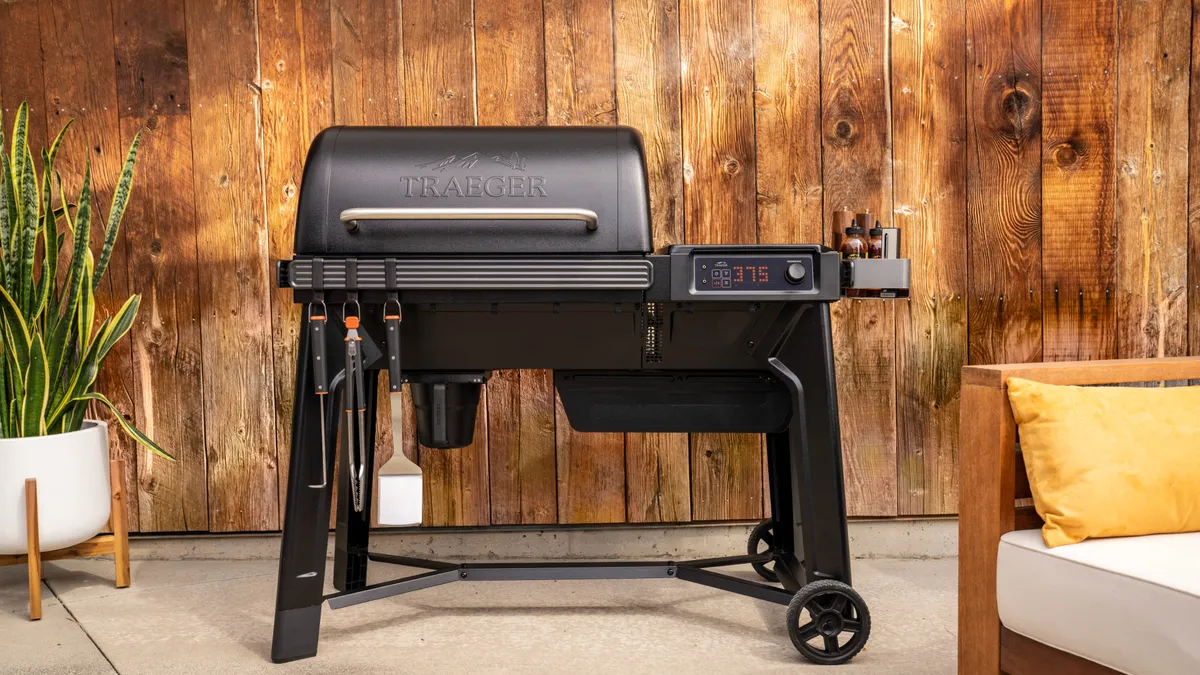
The Traeger Ranger grill has earned attention because it is not shaped like a backyard trophy. It is a squat, suitcase-style cooker built for short decks, tailgate tables, and fishing weekends. Official Traeger material says the Ranger includes a Digital Arc controller, Keep Warm Mode, a meat probe, porcelain-coated steel grates, and a cast-iron griddle, which shows the product is built around control more than size.
That matters because small cookers are less forgiving. A full-size smoker can hide heat swings with mass, space, and airflow. A compact box cannot. When you put six burgers or a rack of ribs inside a smaller chamber, every design choice has a louder effect. The controller, probe, lid seal, and hopper feed are not side details. They are the whole experience.
A non-obvious point: portability is not only about weight. The Ranger is listed at 60 pounds on Traeger’s U.S. portable page, which means many buyers will move it with two hands, not toss it around like a camp stove. The value is not backpack mobility. It is controlled cooking in places where a full smoker would be silly.
Why smart controls need to earn their place
Smart features sound good in a product headline, but outdoor cooking is still physical. You have to fill pellets, manage grease, keep power available, protect the unit from weather, and cook to safe internal temperatures. A screen or app does not fix a bad setup. It only helps when it removes guesswork from the cook.
That is where buyers should judge any smarter Ranger-style model. Can it help you notice pellet levels before a pork shoulder stalls at hour four? Can it show probe readings clearly while you are setting up a tailgate table? Can it keep food warm when guests show up late after a youth baseball game in Ohio or a boat day in Florida?
The best smart pellet smoker is not the one with the longest feature list. It is the one that lets you cook with fewer anxious lid lifts. That sounds small until you have a brisket flat drying out because the cook turned into a guessing contest.
Smart Features Should Fix Real Outdoor Cooking Problems
A compact Traeger with smarter tools has to answer one plain question: what pain does the feature remove? Many U.S. buyers already have too many apps, chargers, alerts, and product dashboards. A grill earns smart status when it makes food better, safer, or easier to time. Anything else is decoration.
What a smart pellet smoker should actually do
A smart pellet smoker should help with three moments: startup, monitoring, and holding. Startup is where beginners get nervous because pellet grills use an auger, fan, firepot, and controller. Traeger’s support guide describes startup as a sequence of plugging in, setting temperature, confirming ignition, and waiting for preheat, which shows why simple prompts matter for new owners.
Monitoring is the bigger win. A meat probe can tell you when chicken is safe without slicing it open and drying it out. The USDA’s safe minimum internal temperature chart lists poultry at 165°F, ground meats at 160°F, and many whole cuts at 145°F with rest time, so probe accuracy is not a fancy add-on. It is part of cooking responsibly.
Holding is where small cookers surprise people. Keep Warm Mode may sound boring next to app controls, but it can save dinner. If ribs finish early before kickoff, or burgers are ready before the kids come in from the lake, holding heat gently is more useful than another graph on a phone.
The trap of buying tech before checking basics
Some buyers chase the newest label and forget the boring checklist. Is there power where you cook? Are pellets easy to store dry? Will the grill fit on the table you own? Can you clean the drip tray without making a mess in the parking lot? These questions decide whether the cooker gets used after the first weekend.
A smart feature cannot make a 60-pound unit feel like a lunchbox. It cannot make a small grate feed twelve adults. Traeger lists the Ranger capacity as one rib rack, six burgers, or ten hot dogs, which is useful because it sets honest expectations before the box lands at your door.
Here is the counterintuitive part: fewer features can feel smarter when they are matched to the job. A tailgater cooking brats and wings may need quick heat, a steady readout, and a simple cleanup path. A backyard hobbyist may want phone alerts, recipe programs, and pellet tracking. Those are different cooks. Do not buy the wrong personality.
Camping Grill Features That Matter Beyond the Spec Sheet
The best outdoor gear gets judged after the meal, not during the unboxing. A compact pellet cooker can look neat online, then become annoying when the picnic table is uneven, the outlet is far away, or the ash cleanup has to happen beside a campsite trash barrel. That is where camping grill features need to be judged by friction, not flash.
Power, pellets, and real travel planning
Pellet cookers need electricity. That single fact separates them from charcoal and propane camping units. Traeger’s Ranger listing says it runs with an included 6-foot AC power cord, so buyers should plan for an outlet, power station, RV hookup, or other safe power source before assuming it belongs anywhere.
For a weekend cabin in Michigan, that is easy. For a beach lot in North Carolina, it may be harder. For a stadium tailgate, it depends on your vehicle setup and local rules. A compact pellet cooker is not a wilderness stove. It is a controlled outdoor cooking tool for places where power is part of the plan.
Pellets add another layer. An 8-pound hopper is generous for short cooks, but dry storage matters. A half-open pellet bag in a humid garage can swell and crumble. Then the feed system has to work harder. Good camping grill features are not only the ones attached to the machine. They include the bags, bins, cords, foil liners, gloves, and brush that make the cook smooth.
Food capacity is smaller than people think
Marketing photos often make compact cookers feel larger than they are. Real food disagrees. Six burgers may feed a small family, but not a hungry tailgate crowd unless you cook in rounds. One rack of ribs works for a couple or a small dinner, not a full block party.
This is not a flaw. It is the trade. A compact cooker gives you smoke flavor and control in a small footprint. It does not beat physics. Buyers who accept that will enjoy it more because they will plan meals around the space: chicken thighs instead of whole birds, pork tenderloin instead of a huge shoulder, hot dogs after the main cook instead of everything at once.
The hidden benefit is discipline. A smaller grate makes you cook with intent. You stop throwing random food on the grill and start thinking about timing, thickness, and heat zones. That can make you a better cook faster than a giant smoker that lets you be careless.
How U.S. Buyers Should Compare It Before Paying
The smartest buying move is to slow down. Product announcements, retailer pages, social posts, and deal blogs can blur model names. If you see a Traeger Ranger Elite listing, compare it against Traeger’s official pages, current support material, and the seller’s return terms before entering card details. That is not paranoia. It is normal due diligence for any appliance with model-year changes.
Compare it against Tailgater, full-size Traeger models, and gas units
Traeger’s portable page lists the Tailgater at 300 square inches of cooking space, 62 pounds, an 8-pound hopper, and a 450°F max temperature. The Ranger is smaller in grate area but close in listed weight, so the choice is not as simple as “small versus large.” The Tailgater gives you more cooking room. The Ranger shape may feel easier to store.
A full-size Traeger makes sense if you mostly cook at home and feed groups. A propane tabletop grill makes sense if you want quick heat, no pellets, and less gear. A charcoal kettle still wins for people who love direct fire and do not want cords involved. The compact Traeger lane is for buyers who want smoke flavor, set temperatures, and travel-friendly storage.
This is where a compact backyard gear guide can help shoppers sort their real use case. The wrong grill is often a good grill bought for the wrong life. If you cook twice a year at a campsite, simple may win. If you cook every weekend on a condo patio, control may matter more.
Check the warranty, return path, and model name
Model naming matters because accessories, covers, griddles, probes, and replacement parts often depend on exact fit. A retailer may use “elite” as a bundle label, a promo phrase, or a product variant. Official pages are the safest baseline. Traeger’s shop pages currently show Ranger and Tailgater under portable grills, while other lines like Woodridge, Ironwood, and Timberline sit in larger categories.
Look for the boring details before you chase the exciting ones. Confirm cooking area, weight, hopper size, max temperature, controller type, probe support, app support, included accessories, warranty coverage, and whether the seller is authorized. Take screenshots of the listing if the model name is new or unclear.
One more thing: shipping damage is more common with heavy outdoor appliances than shoppers expect. A dented lid or bent hinge can affect heat retention. Buy from a place with a clear return path, especially if the cooker is being shipped instead of picked up locally.
Conclusion
A smarter compact Traeger sounds appealing because it meets a real shift in American cooking. People want smoke flavor at tailgates, lake houses, balconies, and small patios without owning a full backyard rig. Still, the smart buyer should separate the product story from the verified product. Current Traeger pages confirm a Ranger with a compact body, 176 square inches of cooking room, an 8-pound hopper, and familiar control-focused features, while any “Elite” label should be checked carefully against official listings before purchase. A portable pellet grill can be a strong fit when you value steady heat, wood flavor, and controlled timing more than huge capacity. It is less appealing when you need cord-free cooking or room for a crowd. The right move is simple: match the cooker to your space, your power setup, your guest count, and your patience for cleanup. Buy the grill that fits the way you actually cook, not the one with the loudest announcement.
Frequently Asked Questions
Is the Traeger Ranger Elite a confirmed official model?
Check Traeger’s official product pages before buying. Current portable listings clearly show the Ranger and Tailgater, but “Elite” naming may vary by retailer, bundle, or promotion. Do not rely on ads alone when model names affect warranty, accessories, or support.
How much cooking space does the Traeger Ranger have?
The current Ranger is listed with 176 square inches of cooking space. That is enough for a small family meal, one rib rack, burgers, hot dogs, or a compact smoke session. It is not built for large parties or bulk meal prep.
Does the Ranger need electricity to cook?
Yes. The Ranger is an electric-powered pellet cooker, so you need access to safe power. That can be a home outlet, RV setup, or suitable power source. This makes planning more important than with charcoal or propane tabletop grills.
Is a compact Traeger good for tailgating?
It can be a strong tailgate option when power, table space, and transport are handled. The appeal is steady pellet heat and wood-fired flavor. The tradeoff is weight, cleanup, and a smaller grate than many gas tailgate grills.
What smart features matter most on a small pellet cooker?
Probe readings, clear temperature control, pellet awareness, and holding modes matter most. These tools help you avoid overcooking, running out of fuel, or opening the lid too often. Extra app features matter less if the core cooking experience is weak.
Can the Traeger Ranger replace a full-size backyard smoker?
It can replace one for small households, patios, and travel cooking. It will not replace a full-size smoker for big briskets, multiple rib racks, or large gatherings. Think of it as a focused cooker, not a scaled-down restaurant pit.
What should buyers check before ordering a new Traeger listing?
Confirm the exact model name, cooking area, weight, hopper capacity, controller type, included accessories, app support, warranty, seller status, and return policy. New naming or bundle language should be verified against official Traeger pages whenever possible.
Is a pellet cooker better than propane for camping?
It depends on your trip. Pellet cookers offer smoke flavor and steady temperatures, but they need electricity and dry pellet storage. Propane is simpler, faster, and easier off-grid. Choose pellets for flavor control and propane for speed and fewer moving parts.