
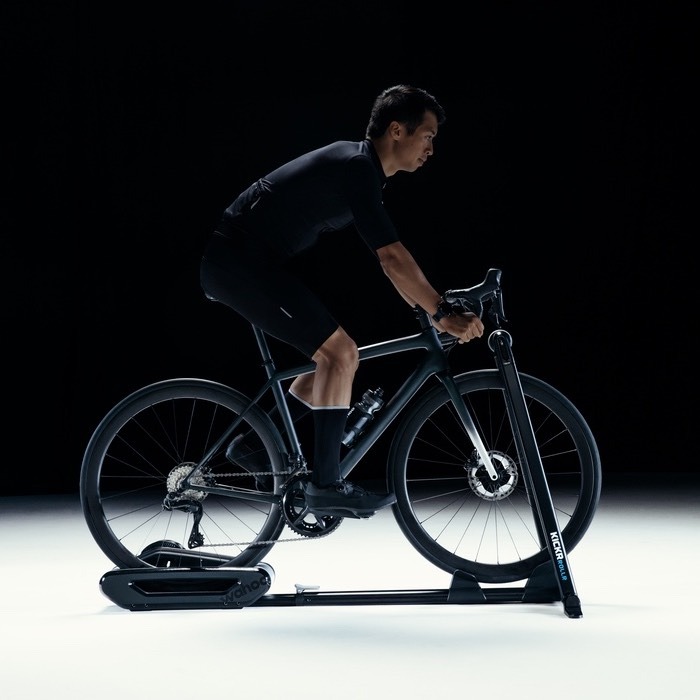
A trainer shortage never feels dramatic until the weather turns ugly and your bike is leaning in the garage, ready for a ride you cannot take. The Wahoo KICKR ROLLR has become a fresh target for American cyclists who want indoor miles without pulling a rear wheel, swapping cassettes, or turning a simple workout into a bench project. That is the real pull here. It is less about gadget hype and more about saving the ride before life eats the hour. Riders tracking consumer gear updates are seeing the same pattern across fitness gear: the products that remove friction tend to move fastest. This all-road smart trainer fits that mood because it lets road riders, gravel riders, and multi-bike households keep one setup ready for bad weather, late nights, and tight schedules. Official specs list a 1,500-watt maximum output, 10% simulated grade, Bluetooth, ANT+ FE-C, and Direct Connect support, which puts it in the serious indoor training lane without forcing the full direct-drive routine.
Why This Restock Matters for Riders Who Hate Bike Setup
The indoor cycling market has spent years teaching riders that “serious” training means removing the rear wheel. That works for some people. For others, it kills the habit before the first interval starts. The ROLLR speaks to the second group: people who want structure, data, and app control, but still want their bike ready for Saturday roads in five minutes.
The no-wheel-removal appeal is bigger than convenience
Anyone who has shared a trainer with another rider knows the pain. One bike has a thru axle. One has rim brakes. One has a different cassette. Someone changes the setup, then the next person spends half a ride fixing rub, pairing sensors, or wondering why shifting feels off.
That friction matters. A parent in Ohio trying to ride before work does not have the same patience as a retired racer building a basement pain cave. A commuter in Seattle may want 35 minutes before rain clears, then ride outside after lunch. The easier the changeover, the more often the trainer gets used.
This is where a roller bike trainer with a front tire gripper becomes more than a novelty. The front wheel stays upright, the rear wheel turns on rollers, and the bike remains a bike. Wahoo says the design can handle tires up to 2.1 inches at the front gripper, which gives it more range than many riders expect from a road-focused trainer.
The counterintuitive part is that convenience can make training harder, not softer. When setup takes less effort, you stop saving the trainer for “serious” days. You use it for easy spins, recovery rides, warmups, and short endurance blocks. That extra use is where fitness quietly grows.
It fits the messy reality of American homes
A lot of trainer reviews assume the rider has a clean spare room, a permanent mat, a mounted screen, and a fan that never moves. Many Americans are working with a garage corner, a shared apartment wall, or a basement spot that also stores holiday bins. Space is not a side issue. It decides whether the setup survives January.
The ROLLR is not tiny. Wahoo’s support page lists it at 31.25 inches wide and adjustable from 57.5 to 65 inches long, with a 50-pound unboxed weight. That means it needs a real footprint, but it does not need drivetrain surgery every time you ride.
That trade feels honest. You give up some floor space. You gain fewer small parts, fewer adapters, and fewer reasons to skip the ride. For a household with two road bikes and a gravel bike, that can matter more than chasing the cleanest possible trainer spec sheet.
For readers building a home setup from scratch, this is also where indoor cycling setup guide content helps. The trainer is only one part. Fan placement, floor protection, sweat control, and screen height decide whether the room feels like a training space or a punishment corner.
How the Wahoo KICKR ROLLR Changes Indoor Training Habits
The Wahoo KICKR ROLLR does not try to feel like every other trainer. That is the point. It sits between classic rollers and a controlled smart trainer, which makes it attractive to riders who want indoor structure without losing the small body movements that make cycling feel alive.
The ride feel rewards smooth riders
Direct-drive trainers can make a rider lazy in a strange way. The bike is locked down, so poor upper-body movement gets hidden. You can mash, sway badly, and still finish the workout. On a roller-style unit, the bike asks for better behavior.
That does not mean it is scary. The front tire gripper gives stability, so it is not like balancing on old-school rollers in a doorway. Still, the rear wheel has a natural movement that reminds you to pedal with care. You feel sloppy force sooner.
That feedback can help road riders. A cyclist in Colorado doing winter sweet-spot work may notice that the ROLLR makes cadence changes feel more like outdoor riding. A rider coming back from a fall break may also find that steady endurance work feels less trapped than it does on a fixed rear triangle.
The non-obvious benefit is mental. Many riders do not quit indoor training because the workout is too hard. They quit because it feels dead. Natural movement gives the brain small signals to process, and that can make a 50-minute session feel less stale.
Smart features still need the right expectations
This indoor cycling trainer is smart, but it is not the same kind of smart as a high-end direct-drive race unit. That distinction matters. Wahoo notes that the trainer can provide onboard power for steady training, while riders who need race-ready precision can pair an external power meter through Power Meter Connect.
That makes the product easier to understand. For fitness, structured workouts, winter base miles, and app-guided riding, onboard consistency can be enough. For Zwift racing, power comparisons, or performance testing against another device, a trusted bike-based meter is the cleaner path.
This is where some buyers get it wrong. They ask whether the trainer is “accurate” as if there is one answer. A rider doing zone-two work after dinner needs repeatable feedback. A rider trying to win virtual sprints needs tighter measurement under hard surges. Those are different jobs.
The ROLLR can serve both riders, but not in the same way. Casual and fitness-focused users can ride it as a low-friction smart setup. Data-driven riders should plan around their own power meter. That is not a flaw. It is the shape of the product.
Who Should Buy This All-Road Smart Trainer Now
An all-road smart trainer makes the most sense when one bike does many jobs. That is why the ROLLR has gained attention beyond pure road cyclists. Gravel riders, endurance riders, triathletes, and fitness cyclists often want indoor miles without turning the bike into a trainer-only machine.
Multi-bike households get the cleanest win
The best buyer may not be the person with the fanciest bike. It may be the couple sharing a garage trainer, or the rider who owns both a road bike and a gravel bike. Fast adjustment is worth more when the trainer has to serve different wheelbases and routines.
Think of a family in North Carolina where one rider trains for a spring charity century while another rides after work for fitness. A direct-drive setup can still work, but cassette match, axle fit, and bike swaps become chores. A roller bike trainer keeps the change simpler.
The same logic applies to riders who hate leaving a bike half-converted. Some people want their road bike ready by the door. They do not want to reinstall a rear wheel because the sun came out. For them, the ROLLR solves a lifestyle problem, not a tech problem.
That is why “all-road” matters here. The phrase is not only about tire size or terrain. It is about the modern rider who refuses to split life into neat indoor and outdoor boxes. One week brings gravel paths, school pickup, rain, and a short trainer ride at night. The equipment has to bend.
Precision-first racers may need a different setup
There is a buyer who should pause. If your indoor rides are mostly virtual races, sprint tests, and tight ERG workouts, a direct-drive trainer may still feel better. Locked-in resistance changes and tighter built-in measurement can matter when every watt becomes a scoreboard.
The ROLLR can pair with an external power meter, which narrows that gap. But that also changes the real cost if you do not already own one. A rider with power pedals may be in great shape. A rider buying everything from zero should compare the full package.
This is where smart trainer buying tips can save money. The right question is not “Which trainer is best?” It is “Which trainer removes the biggest barrier from my riding?” For one cyclist, that barrier is power accuracy. For another, it is setup time. For another, it is a spouse who also wants to ride.
The least obvious advice: do not overbuy for the rider you wish you were in February. Buy for the rider you are on a tired Tuesday. A trainer that gets used four times a week beats a perfect trainer that feels like a project.
What to Check Before You Order During a Restock
Restock excitement can push people into fast decisions. That is risky with indoor cycling gear because fit, space, noise, and app needs all matter. The ROLLR is simple compared with many trainers, but it still deserves a smart pre-check before money leaves your account.
Bike fit and floor space should come first
Start with wheelbase and tire clearance. Wahoo’s support details list an adjustable length range and a front tire gripper design meant to hold the bike upright without removing wheels or adding adapters. That is the attraction, but your actual bike still needs to match the trainer’s limits.
Measure the space too. Do not guess. A trainer may fit on paper and still feel cramped once you add a fan, a laptop stand, a mat, a towel, and room to step off safely. A small apartment rider in Boston may need a fold-and-store plan. A garage rider in Texas may care more about airflow than storage.
Noise is another practical point. The drivetrain, tire contact, and room surface all affect what your downstairs neighbor hears. A smooth tread tire can help. So can a mat. The loudest part of an indoor ride is often not the trainer motor; it is the bike, the fan, or the floor acting like a drum.
That detail gets missed in buying guides because it feels boring. It is not boring at 6 a.m. when someone below you bangs on the ceiling.
Accessories can make or break the experience
The trainer gets the headline, but the accessories decide whether you come back. A strong fan matters more than most beginners think. Indoor cycling removes natural wind, so sweat builds fast. Without airflow, a moderate endurance ride can feel harder than it should.
A mat protects floors and catches sweat. A small table or desk keeps the phone, bottles, remote, and towel in reach. These are not luxury extras if they prevent interruptions. Stopping mid-workout to grab a towel breaks rhythm and turns a clean session into clutter.
Wahoo lists compatibility with its HEADWIND fan and desk accessories, but riders can build a good setup with other gear too. The rule is simple: cooling first, stability second, screen comfort third. Fancy items come later.
The counterintuitive buying move is to leave money for the room. Many riders spend every dollar on the trainer, then ride in a hot corner with no fan and blame the equipment. The better plan is a balanced setup. A good trainer in a bad room feels worse than a midrange trainer in a smart room.
Conclusion
The return of this trainer says something about where indoor cycling is heading. Riders still care about power, app control, and structured workouts, but they are tired of gear that turns every ride into a setup task. Convenience has become a performance feature because it protects consistency. The Wahoo KICKR ROLLR works for cyclists who want indoor miles to feel closer to outdoor riding, especially when one bike has to move between garage, road, gravel path, and training app. It will not be the perfect pick for every racer, and buyers who need the tightest data should think hard about pairing a power meter. But for American riders who want fewer excuses and faster ride starts, this restock deserves attention. Check your bike fit, measure your space, price the full setup, and buy only if it solves your real problem. The best trainer is the one that keeps you riding when the road says no.
Frequently Asked Questions
Is the Wahoo trainer worth it for casual indoor cycling?
Yes, it makes sense for casual riders who value fast setup, natural movement, and fewer bike changes. It is best for steady fitness rides, winter base miles, and app-guided sessions rather than all-out virtual racing without an external power meter.
How much space do I need for this roller bike trainer?
Plan for more than the trainer footprint. You need space for the bike, safe mounting, a fan, a mat, and room to step off. A garage corner works well, but apartment riders should measure length, width, and storage clearance before ordering.
Do I need a power meter to use the trainer?
No, onboard power can support steady training and app-based riding. A separate power meter is better for riders who want tighter race data, cross-device comparisons, or more trusted numbers during hard intervals and virtual events.
Is this better than a direct-drive smart trainer?
It is better for quick bike swaps, natural rear-wheel movement, and riders who dislike removing wheels. A direct-drive trainer may be better for racers, sprint testing, and riders who want the most fixed, controlled indoor feel.
Can gravel bikes work on an indoor cycling trainer like this?
Many gravel bikes may work if wheelbase and tire size fit the trainer’s limits. Smooth tires are usually the better choice for indoor riding. Riders with wide or knobby tires should check compatibility before buying to avoid noise and fit problems.
Why are cyclists watching this restock closely?
The appeal comes from timing and convenience. Riders want indoor options during bad weather, busy workweeks, and training blocks, but many do not want a complicated setup. A restock gives them another chance at a lower-friction training option.
What accessories should I buy first?
Start with a strong fan, floor mat, and stable surface for your phone or laptop. Cooling changes the ride more than most new riders expect. After that, consider a sweat guard, extra bottles, and a better screen setup.
Is this smart trainer good for Zwift workouts?
Yes, it can work well for Zwift workouts when set up correctly. Fitness riders can use onboard power for consistent sessions, while riders who care about race-ready data should pair an external power meter for cleaner power reporting. After Extended Wait