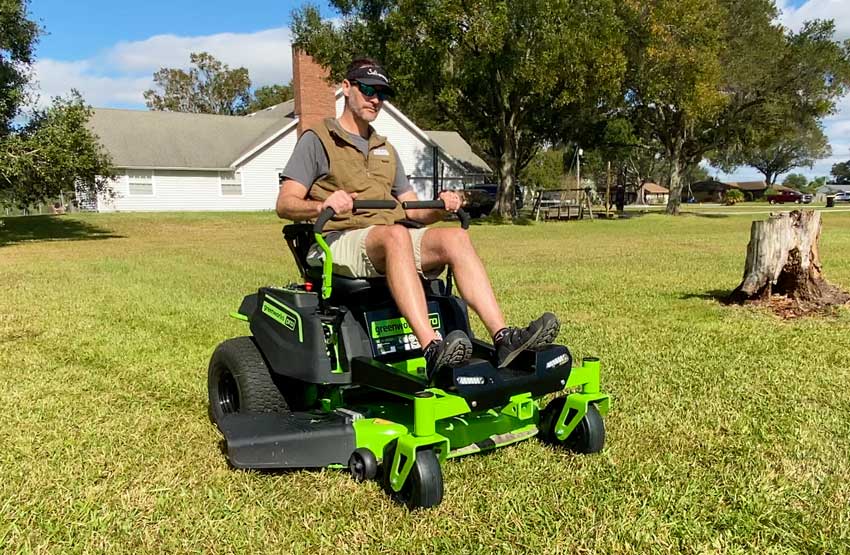
The old weekend mower test used to be simple: pull the cord, smell the fuel, hear the engine, and hope the yard was done before the heat got mean. That habit is changing fast, and the GreenWorks 80V riding lawn mower sits right in the middle of that change. The headline says it is outselling gas competitors, but public retail pages do not prove a national unit-sales race. What they do show is buyer interest, strong product visibility, and a sharper reason homeowners are looking past gas. Greenworks lists 80V and 60V ride-on models in its mower lineup, including 42-inch CrossoverT and CrossoverZ options, with some models sold out or discounted at the time checked.
That matters because Americans are no longer comparing only horsepower. They are comparing noise, storage, maintenance, charging time, neighborhood rules, and how often a machine fights them. A battery powered mower now has to answer the same question as a gas unit: can it finish a real yard without drama? For homeowners tracking practical product shifts through consumer buying trends, this is not only a mower story. It is a story about how outdoor tools are becoming easier to live with.
The Yard Machine People Wanted, But Did Not Trust Yet
For years, battery outdoor gear had a credibility problem. Homeowners liked the idea, then pictured a weak machine dying halfway through thick spring grass. That fear made sense with early cordless tools. They were fine for small patios and neat suburban strips, not for rougher lawns with dips, slopes, weeds, and wet corners.
The new buyer tension is different. People are not asking whether batteries can spin a blade. They are asking whether the whole ownership experience is better than gas. That includes the part no one brags about: hauling fuel cans, changing oil, storing stabilizer, clearing fumes from a shed, and waking up half the block on Saturday morning.
Why gas loyalty is softer than it looks
Gas mower loyalty often comes from memory, not love. Plenty of homeowners grew up around loud engines and learned to see noise as proof of strength. Yet the actual routine can be annoying. You have to keep fuel fresh, baby the engine after storage, and deal with small failures that always seem to happen when the grass is already too tall.
That is where the electric lawn mower argument gets stronger. It does not need to beat gas in a lab chart to win in a driveway. It has to start cleanly, cut evenly, and remove enough chores that the owner feels the difference before the first pass is done.
There is a counterintuitive part here: silence can make a machine feel less powerful even when it is cutting well. A loud engine gives feedback. A quieter motor asks you to judge the lawn, not the sound. That small mental switch is one reason some buyers need a few mows before they fully trust electric equipment.
The real appeal is control, not novelty
A 42-inch deck matters because it changes how long a weekend job takes. Lowe’s listing for the Greenworks Pro CrossoverZ describes a 42-inch deck, battery power, dual cutting blade motors, up to 2 acres per charge, and a full recharge claim of 75 minutes for the six batteries. The same listing also shows a top forward speed of 8 mph and a 15-degree incline rating.
Those numbers matter most when they match a real yard. A homeowner on a half-acre corner lot with fence lines, tree roots, and a sloped side yard is not shopping for a science project. They want predictable control. They want the same machine to handle Tuesday evening touch-ups and the heavy Saturday cut after a rainy week.
That is also why a gas mower can lose ground even if it still has loyal fans. Buyers do not always switch because the old option failed. Sometimes they switch because a newer option removes enough friction to make the old routine feel dated.
Why the GreenWorks 80V Riding Lawn Mower Feels Like a Buyer Shift
The big shift is not that battery tools exist. They have existed for years. The shift is that a ride-on electric machine now sits in the same mental shopping aisle as gas tractors and zero-turns. That means the buyer is no longer treating electric as a side category. They are comparing it against familiar machines and asking which one fits the household better.
This is where Greenworks benefits from timing. More homeowners already own battery drills, leaf blowers, trimmers, and push mowers. The jump to a battery powered mower no longer feels strange. It feels like the next tool in a garage that is already half electric.
The battery platform changes the value math
Sticker price still matters, and electric ride-on machines are not cheap. Greenworks’ own store showed an 80V 42-inch CrossoverT at $4,499.99 and an 80V 42-inch CrossoverZ sale listing at $4,699.99 when checked, which places these machines in serious purchase territory. That is not impulse-buy money for most American households.
The value argument shows up after the purchase. No gas cans. No oil change schedule. No spark plug runaround. No carburetor drama after winter. Blade care and deck cleaning still matter, but the maintenance list feels shorter and less messy.
The hidden value is time confidence. If you can plug in after a mow and know the machine will be ready next time, the yard stops becoming a small gamble. That matters in places like Ohio, North Carolina, Georgia, and Missouri, where spring grass can punish anyone who misses one good mowing window.
Performance has to feel boring in the best way
The highest praise for this kind of machine is not excitement. It is boredom. You turn it on, cut the lawn, park it, and forget about it until the next job. Lowe’s customer summary says buyers praised performance, power, battery life, quiet operation compared with gas models, storage, and mulching ability, while some reported reliability problems needing repairs or parts.
That mixed picture is worth taking seriously. A machine can be strong and still not be perfect. Electric ownership removes certain gas headaches, but it adds battery care, charger dependence, software or sensor concerns, and the need for nearby service support.
The non-obvious point is that reliability complaints can sting more with electric equipment because buyers expect fewer moving parts to mean fewer problems. When something does go wrong, it feels like a broken promise. Smart buyers should check local service options before they fall in love with the spec sheet.
The Quiet Advantage Is Bigger Than Comfort
Noise is usually treated as a bonus feature. That sells it short. A quieter mower changes when you can work, how long the job feels, and how much your neighbors notice. In dense suburbs, that can matter as much as deck width.
Anyone who has cut grass at 8 a.m. in a tight neighborhood knows the social pressure. You may be allowed to mow, but that does not mean everyone wants to hear it. A quieter electric lawn mower can make yard care feel less rude, especially around homes with babies, night-shift workers, older neighbors, or backyard gatherings.
Less noise changes the mowing schedule
A quieter machine does not mean silent. Blades still cut air and grass. Tires still move over uneven ground. But the lack of engine roar changes the whole mood. You can hear more of what is happening around you, and the job feels less like operating a small machine shop in the yard.
That matters during summer heat. In much of the U.S., the best mowing window may be early morning or near sunset. A loud gas mower limits those windows because it feels intrusive. A quieter unit gives you more room to choose the safer, cooler hour.
The funny part is that quieter mowing can make some owners mow more often. Not because they suddenly love lawn care, but because the job feels lighter. If the task does not punish your ears and nerves, it stops being something you delay until the yard looks embarrassing.
Cleaner operation matters even when buyers are not activists
Some homeowners shop electric because of emissions. Many do not. They care because fuel smell is unpleasant, garages are crowded, and gas storage can be a hassle. Still, the environmental point is real. EPA-linked research has described gasoline-powered lawn and garden equipment as a major part of U.S. nonroad gasoline emissions, and older EPA material says equipment such as lawn mowers and leaf vacuums can be a significant pollution source.
That does not mean every buyer is making a climate statement. A Texas homeowner may switch because the garage smells better. A New Jersey homeowner may switch because local noise rules are tightening. A California buyer may switch because gas equipment restrictions already shape the market.
This is the part many product pages miss: cleaner operation sells best when it is tied to daily comfort. Less exhaust in your face is not an abstract benefit. It is the difference between finishing a mow feeling worn out and finishing one feeling like you did a normal household task.
Where Buyers Should Be Careful Before Switching
The sales buzz can make battery ride-on machines sound like an automatic upgrade. They are not. They fit many homeowners well, but the wrong yard can expose their limits fast. Thick acreage, long wet grass, steep grades, limited charging access, and weak service coverage can turn an exciting purchase into an expensive lesson.
A gas mower still has a place. Rural owners with large acreage, remote sheds, heavy towing needs, and long mowing sessions may care more about fast refueling than quiet operation. Electric machines are improving, but the best choice is still tied to your yard, not the trend.
Match the mower to your worst mowing day
Do not judge by your easiest cut. Judge by the day after five days of rain when the back corner is thick, the grass is heavy, and you have one evening to get it done. If the machine can handle that day, normal mowing will feel easy.
This is where battery size, deck width, terrain, and cutting habits all meet. A 42-inch deck can save time, but it can also be awkward around tight gates or small landscaped beds. Zero-turn steering can be fast in open sections, but it may feel touchy for someone used to a tractor-style wheel.
A smart buyer should walk the yard first. Count slopes, gates, roots, wet spots, storage space, and outlet distance. That simple walk can tell you more than ten glowing comments because the mower has to live at your house, not inside a showroom.
Service access matters more than brand hype
A battery machine still needs support. Blades wear. Tires lose air. Sensors fail. Chargers can quit. Batteries age. The difference is that many owners are less comfortable repairing electric drive systems than gas engines, so dealer or retailer support becomes part of the purchase.
Before buying, check who handles warranty work near you. Ask how batteries are replaced. Look for return terms, not only star ratings. A mower that looks good online can become a headache if the closest service path is vague.
The non-obvious advice is to buy the support network, not only the machine. A slightly less flashy option with easier service may beat a better-looking model that leaves you stuck during peak grass season. For many homeowners, the best purchase is the one that keeps mowing boring.
For related planning, pair this choice with a seasonal yard equipment buying guide and a home garage storage setup. The mower is only one part of the system. Charging, storage, and tool layout decide how painless ownership feels in month six.
Conclusion
Electric mowing has moved past the stage where buyers only ask whether the idea works. The better question now is whether it works for your yard, your schedule, and your tolerance for maintenance. That is a healthier way to shop. It cuts through hype and gets closer to real ownership.
That is why the GreenWorks 80V riding lawn mower deserves attention beyond the headline. It represents a wider shift toward quieter, cleaner, lower-maintenance yard work for American homeowners who are tired of fighting gas tools every season. It does not erase the strengths of gas machines, and it does not fit every property. But it makes the old tradeoff feel less automatic.
The smartest move is to ignore the loudest claim and study the dull details: acreage, slopes, charging time, service access, storage, and your worst mowing day. If those details line up, this kind of mower can make lawn care feel less like a chore you endure and more like a task you can control. Choose the machine that makes the next five summers easier.
Frequently Asked Questions
Is the Greenworks 80V mower better than a gas model?
It can be better for homeowners who value quiet cutting, cleaner storage, and lower routine maintenance. Gas still makes sense for some large or remote properties. The right choice depends on acreage, terrain, service access, and whether charging fits your normal yard routine.
How long does the Greenworks 80V battery last while mowing?
Runtime depends on grass height, moisture, slope, blade speed, rider weight, and mowing style. Retail listings describe up to 2 acres for certain 42-inch models, but thick or wet grass can reduce that. Judge the claim against your hardest mowing conditions.
Is an electric lawn mower strong enough for thick grass?
High-voltage electric models can handle normal thick residential grass when the deck is set correctly and blades are sharp. The real test is wet, overgrown grass. If your yard often gets away from you, choose extra battery capacity and avoid waiting too long between cuts.
What maintenance does a battery powered mower need?
You still need to sharpen blades, clean the deck, check tires, inspect belts or moving parts where applicable, and store batteries correctly. You avoid gas, oil changes, spark plugs, and many fuel-system problems. Battery care becomes the new habit.
Does a Greenworks mower save money over time?
It may save on fuel, oil, filters, and some engine service, but the upfront price can be high. Long-term value depends on battery life, repair needs, electricity cost, and how many years you keep it. Service support should factor into the math.
Can I mow early in the morning with an electric mower?
Often, yes, because electric models tend to be quieter than gas machines. Local noise rules still matter, and blade noise remains. The biggest benefit is flexibility: you may be able to mow during cooler hours without bothering the neighborhood as much.
What size yard fits a 42-inch electric mower?
A 42-inch deck works well for many suburban lawns from around half an acre up to larger open lots, depending on battery range. Tight gates, narrow side yards, trees, and small landscaped areas may make a smaller deck easier to control.
Should I buy a Greenworks ride-on mower now or wait?
Buy now if your yard fits the range, service is available nearby, and the price makes sense. Wait if you need more proof on battery life, want deeper discounts, or have a tough property where fast refueling and heavy-duty gas performance still matter.