
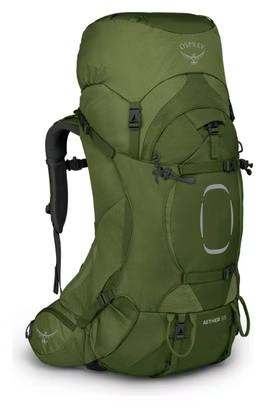
A trail pack does not earn attention because it looks nice in a product photo. It earns it after mile 12, when food weight, a wet shell, a bear can, and sore hips start telling the truth. That is why the Osprey Aether 55 backpacking pack keeps showing up in U.S. hiking talk, especially among people planning long weekends, section hikes, and bigger trail goals. The appeal is simple: it sits in the middle ground between ultralight bragging rights and old-school load hauling. Osprey lists the S/M version at 55 liters, with a 30 to 60 pound load range and a listed weight a little under 4.9 pounds, which tells you this is built for support rather than gram-counting glory. For shoppers tracking outdoor gear updates, the Aether 55 feels like one of those packs that gets talked about because it solves an actual trail problem. It gives newer backpackers room to pack safely, while giving experienced hikers enough structure to carry awkward food and water loads without feeling punished.
Why This Backpacking Pack Fits the Thru-Hiking Moment
The thru hiking community has changed the way Americans judge gear. A pack no longer gets respect because it has the most pockets, the loudest color, or the biggest logo. It gets respect when people can picture it surviving the boring parts of trail life: loading up at a grocery store in a small town, climbing out of a gap in the rain, or squeezing one more day of food into a tired setup before a dry stretch. The Aether 55 is not the lightest option in the room. That is the point. It is for hikers who would rather carry a little more frame if that frame keeps the load steady.
The draw is fit, not flash
A lot of packs feel fine when they are half-full in a store. The truth arrives when the load gets dense. Food presses outward. A stove digs into the wrong spot. A rain shell you thought would stay on top sinks into a side gap. Then the hipbelt either carries the work, or your shoulders pay the bill.
The Aether 55 leans hard into fit adjustment. Osprey describes its Custom Fit-on-the-Fly shoulder straps and hipbelt, plus an adjustable torso system, as part of the carry design. The company also points to an AirScape backpanel built for close contact and airflow channels. That matters because long trail comfort is not soft padding alone. It is the way the pack keeps weight from wandering.
Here is the non-obvious part: too much softness can be a problem. A plush pack can feel great during the first five minutes, then start moving around once sweat, steep grades, and uneven trail enter the picture. A firmer carry can feel less cozy at first, yet feel better after a full day because it wastes less motion.
Why the thru hiking community notices heavy-load comfort
Thru-hikers talk a lot about cutting ounces, and for good reason. But the trail has a way of creating heavy carries even for careful hikers. A long waterless stretch on the Pacific Crest Trail can turn a tidy load into a shoulder test. A cold, wet section in the Smokies can make extra layers feel less optional. A bear canister in the Sierra does not care about your spreadsheet.
That is where a supportive trail pack keeps earning attention. A thru hiking pack does not need to win every scale contest. It needs to stay honest when the food bag is full and the climb starts early. The Aether 55 can make sense for hikers who are still learning their kit, or for section hikers who carry camera gear, a warmer sleep system, or group items for a partner.
The smarter conversation is not “heavy versus light.” It is control versus collapse. A light pack with a poor match to your load can feel worse than a heavier pack that transfers weight cleanly to your hips. That is why the Aether 55 keeps finding an audience with hikers who want comfort without jumping all the way to a giant expedition pack.
This also explains why online trail chatter can look split. One hiker calls it too heavy. Another calls it the first pack that made a hard carry feel manageable. Both can be telling the truth. Gear opinion depends on the load behind the opinion, and that detail gets lost in comment threads.
What Makes the Osprey Aether 55 Feel Different on Trail
A pack’s listed size only tells part of the story. Two 55-liter packs can feel nothing alike once they are packed for three nights in Colorado or a week in the Appalachians. The Osprey Aether 55 sits in a useful lane because it feels built around load behavior, not storage tricks. It gives you enough structure to carry more than a bare-bones kit, but it still asks you to pack with discipline.
Fit-on-the-Fly matters when your body changes
Your body does not stay the same through a long hiking season. Waist size shifts. Layers come on and off. A hipbelt that felt dialed in during spring training can feel loose after a hard month of miles. That is one reason small fit adjustments matter more than many buyers expect.
The Aether’s adjustable hipbelt and shoulder strap setup gives hikers more room to tune the carry as conditions change. Osprey says the extendible hipbelt allows incremental length and angle adjustments, while the shoulder straps are designed for a more precise wrap. In plain terms, you have more ways to fix hot spots before they become a bad day.
Think of a hiker leaving Damascus, Virginia, after a resupply. The pack is suddenly heavier, the weather looks mixed, and the climb out of town feels rude. A small hipbelt adjustment can move pressure away from one sore point. That does not sound exciting online. On trail, it can save your mood.
Fit also changes through the day. In the cool morning, layers add bulk under the shoulder straps. By afternoon, those layers are packed away and sweat changes how the hipbelt grips. A pack that allows small corrections gives you more control than a fixed setup that felt perfect only at breakfast.
A 55 liter backpack rewards better packing habits
A 55 liter backpack gives you room, but not endless forgiveness. That is a healthy limit. It can hold a solid three-season setup for many U.S. hikers, yet it still pushes you to question the extra fleece, the oversized camp shoes, or the food bag packed like a panic buy.
This is where the Aether 55 may help newer backpackers more than an ultralight pack would. A frameless or lightly framed setup often demands tight gear choices from the start. The Aether gives you more margin while you learn what you use, what you regret, and what always rides at the bottom untouched.
Still, the pack will not fix messy planning. The National Park Service advises hikers to think about what they can comfortably carry and how long they can carry it, which is the kind of question every gear shopper should answer before checkout. If your load keeps creeping upward, the solution is not always a bigger pack. Sometimes the answer is leaving the third “maybe” item at home.
A smart packing order helps too. Dense items belong close to your back and near the middle of the pack. Puffy items can fill lower or outer spaces. Snacks, rain gear, water treatment, and a headlamp should be easy to reach. The Aether gives you structure, but it still rewards calm packing over stuffing.
Where It Works Best for U.S. Backpackers
The Aether 55 makes the most sense when the trip has enough weight, weather, or distance to reward support. It is not a casual day-hiking bag. It is not the leanest choice for someone with a dialed sub-10-pound base weight. Its sweet spot is the messy middle: backpackers who want comfort on real overnight routes, not a trophy item for a gear shelf.
Long weekends, section hikes, and mixed weather trips
For many Americans, the best use case is not a full border-to-border hike. It is a three-night loop in the Wind River Range, a section of the Appalachian Trail, a late-spring trip in the Cascades, or a desert route where water makes the first day heavy. Those trips do not always demand a massive pack, but they punish weak support.
The Aether 55 also fits hikers who share gear. Maybe you carry the tent while your partner carries more food. Maybe you bring a warmer bag because shoulder-season nights in the Rockies can drop faster than expected. A 55 liter backpack gives enough room for that type of real trip planning without turning every climb into a hauling contest.
The counterintuitive piece is that a mid-size supportive pack can make you pack less, not more. Because the space has clear limits, you are forced to choose. You can bring the warmer puffy or the extra camp hoodie, but not both without feeling the squeeze. That pressure can create better decisions.
For families and newer groups, that limit is useful. One person often becomes the “extra carrier” for shared items, and the load grows without anyone naming it. A pack like this can handle that role, but it also makes the weight visible. When the hipbelt feels crowded, the group has to talk about what belongs in camp and what belongs in the car.
When a thru hiking pack can be too much
There are hikers who should skip the Aether 55. If your kit is already small, soft, and light, this pack may feel like too much frame for the job. A weekend hiker with a quilt, tarp, tiny stove, and compact food kit might be happier in a lighter 45 to 50 liter model. The pack should match the load, not your dream version of the trip.
A thru hiking pack also needs to fit your hiking style. Some people want a tight, stable carry even if the pack weighs more. Others want the least pack they can safely use. Neither camp is wrong. The mistake is buying for someone else’s trail identity.
This is where a shakedown hike earns its place. Load the pack for one night, walk a local trail, and write down what annoyed you before reading more reviews. Your shoulders, hips, and pace will give cleaner feedback than a stranger’s base-weight number.
Before making that call, review a beginner backpacking checklist against your actual gear pile. Then compare it with a lightweight camping gear guide to see where your bulk is coming from. If your sleep system and shelter eat half the volume before food enters the pack, the Aether 55 may feel sensible. If everything packs down small, it may be more support than you need.
How to Decide Before the Pack Sells Out
Gear hype can make any pack feel urgent. The smarter move is to slow the decision down for a few minutes. The Aether 55 is a strong candidate for a certain kind of backpacker, but it still has to pass the fit, load, and trip test. A good pack is not the one everyone is sharing. It is the one you forget about for long stretches because it is doing its job.
Check fit before chasing hype
Start with torso size, hipbelt feel, and shoulder wrap. If the pack sits too high, pulls backward, or leaves the hipbelt floating above your hips, no feature list will save it. Load it with weight close to what you plan to carry, not pillows or empty boxes. Walk stairs if you can. Bend, twist, and reach for a side pocket.
Pay close attention to where pressure shows up first. A little shoulder pressure is normal during adjustment. Sharp collarbone bite is not. A hipbelt should feel firm, not pinching. The lumbar pad should help hold the pack in place without feeling like it is shoving your lower back forward.
The best test is boring: wear it longer than you want to. A pack that feels good after two minutes may feel wrong after twenty. That tiny annoyance near your ribs in the store can become the only thing you think about after six miles of rock steps in New Hampshire.
Also test the pockets with your own habits. Can you reach a bottle without taking the pack off? Do the hipbelt pockets hold your snacks, lip balm, or small camera? Can you open the main compartment without turning your packed gear into a yard sale? Trail comfort includes these small movements.
Compare it against lighter and larger options
The Aether 55 sits between two common temptations. One is going lighter because the internet praises low base weight. The other is going larger because extra room feels safe. Both can backfire. Too little structure can make a normal load unpleasant. Too much space invites packing fear instead of packing needs.
Use the National Park Service’s Ten Essentials as a safety floor, not a packing excuse. NPS lists systems such as navigation, sun protection, extra clothing, illumination, first aid, fire, repair tools, nutrition, hydration, and emergency shelter. Once those are covered, every extra item should have a job you can defend.
For a U.S. hiker building toward longer trips, the Aether 55 is most convincing when your load often lands in the middle-heavy zone. That means food for several days, water for dry routes, weather layers, and a shelter system that is compact but not tiny. If that sounds like your trail life, the chatter around this pack is not random noise. It is a sign that comfort still matters.
There is one more buying check: think about your next two seasons, not your next perfect trip. If you plan to move toward smaller gear fast, a lighter model may grow with you better. If you expect shoulder-season trips, scout outings, dog gear, camera gear, or longer food carries, the Aether’s support has a clearer job.
Conclusion
The smartest gear choices are rarely the loudest ones. They are the choices that hold up when the trail gets plain, wet, steep, and tiring. The Aether 55 has become part of the conversation because it meets that less glamorous test. It gives backpackers structure, room, and adjustability without pretending every hiker is ready for a tiny loadout. For many Americans planning section hikes, national park routes, or longer trail dreams, the Osprey Aether 55 backpacking pack earns attention because it supports the kind of real weight people actually carry. It is not the right pick for every minimalist, and that honesty makes it easier to recommend to the right buyer. Choose it if your trips demand comfort under load, not if you want a badge for going light. Measure your gear pile, test the fit with weight, and buy the pack that helps you stay moving when the pretty part of the day is over. The trail will tell you fast whether you chose support or style.
Frequently Asked Questions
Is the Osprey Aether 55 good for thru hiking?
Yes, for hikers who carry moderate to heavier loads or want more structure than ultralight packs provide. It may be too much for a dialed minimalist kit, but it fits section hikers and thru-hikers who need comfort with food, water, and weather layers.
How much weight can the Osprey Aether 55 carry?
Osprey lists the pack’s load range at 30 to 60 pounds, depending on fit and size. Most hikers will be happier staying near the lower or middle part of that range, since comfort depends on body shape, terrain, packing skill, and distance.
Is a 55 liter pack enough for backpacking?
Yes, 55 liters is enough for many three-season U.S. backpacking trips when your shelter, sleep system, and clothing are reasonably compact. Winter gear, bulky older equipment, or long food carries may push some hikers toward a larger model.
What is the main downside of the Osprey Aether 55?
Weight is the tradeoff. The pack gives you support, adjustment, and load control, but it is not aimed at ultralight hikers. Buyers with compact kits may feel they are carrying more pack than their gear requires.
Is the Aether 55 better than an ultralight pack?
It depends on your load. The Aether 55 can feel better with heavier food, water, or group gear. An ultralight pack may feel better when your total load is low and your gear is already small enough to pack cleanly.
Can beginners use the Osprey Aether 55?
Yes, and many beginners may appreciate the support and fit adjustment. The key is not to fill every inch. Beginners should still pack with care, remove unused extras after each trip, and learn how weight placement changes comfort.
Does the Osprey Aether 55 include a rain cover?
Osprey’s product page describes an included raincover on current Aether 55 product information. A pack liner is still worth considering because rain can enter through openings, wet gear, or repeated exposure during long storms.
What trips suit the Aether 55 best?
It suits long weekends, section hikes, shoulder-season routes, and trips where water or food weight gets high. It is less ideal for day hikes, fast overnights with tiny kits, or hikers chasing the lowest possible base weight.